
Deliverance
Diving in the Place of the Lost One

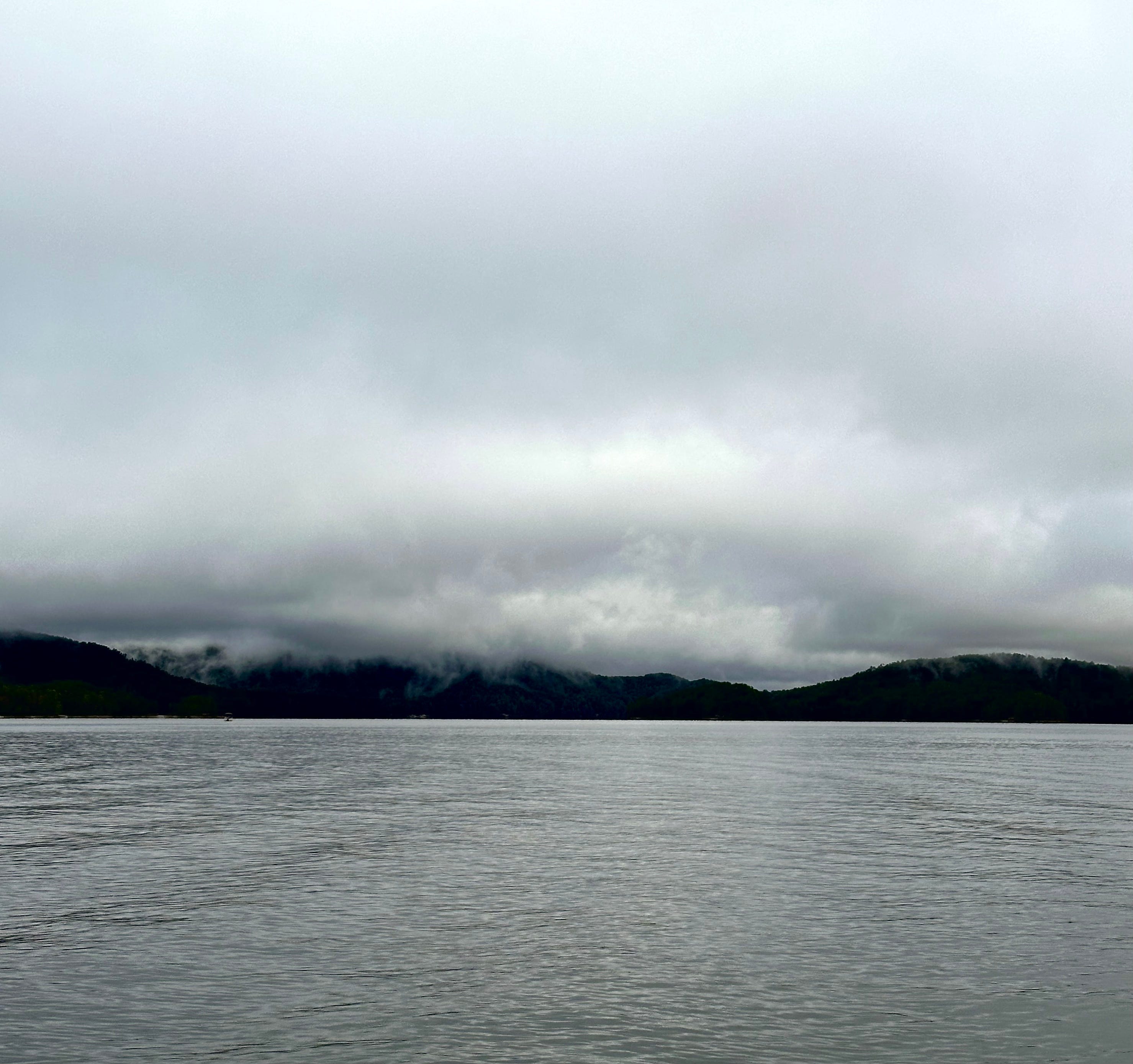
October is the typical end of the diving season in Lake Jocassee. The water is clinging on to its last bits of warmth before the air and water temperatures dip below what charters will endure. South Carolina’s Upstate has fallen into a sleepy autumn. Some will migrate to nearby Lake Keowee to take advantage of the comparative warmth of its nuclear power station’s discharge, but on the whole, the season won’t start up again until the following spring. I was certified here, and often return; it’s where I’m most comfortable. The state and Duke Power flooded the Jocassee and Keowee River Valleys in 1973 as part of a series of reservoirs for the Oconee Nuclear Power Station and hydroelectric dams in a scheme modeled after the Tennessee Valley Authority. The resulting lake is deep.
Jocassee is a Cherokee name that means “Place of the Lost One.” As the story goes, Jocassee was the daughter of a Cherokee Brown Viper chieftain, Attakulla, who fell in love with Nagoochie, a warrior from the Green Bird tribe. He was soon killed in battle by her brother. She rushes down to find him dead, but makes no expression. She simply gets into a canoe and heads down the Sarratay River. Staring into the distance, she slipped off the side and sank without ever rising to the surface. But depending on who you ask, they might say she walked across the water to meet the ghost of her lover and disappeared. Much was lost when the valley was flooded.
A small group gathers outside of the dive shop on the cool October morning. The place has been a local fixture for the last three decades. The proprietor is a local legend, responsible for much of the finding and adding many of the lake’s dive sites. He located one of its deepest-known surviving structure, the Attakulla Lodge, nearly 300 feet below the surface. Our goal is a little shallower, located on top of a nearby hill — Mount Carmel Baptist Cemetery. If you’ve ever watched Deliverance (1972), you’ve seen it. The moving of the dead that occurs at the start of the picture was filmed roughly 130 feet below where the captain will soon aim to tie onto a buoy.
The morning is appropriately somber, the sky grey as the mountainous slate, a dense fog reducing visibility to less than twenty feet. The motor out is quiet. The lake is often empty this time of year. Divers prep their gear silently, double checking weight and taking cautious breaths out of their regulators as they slip into their protective suits. The surface of the lake is glass. Still, it’s difficult to find the marker. The buoy has been lost — either purposefully or by a careless weekend boater — leaving us little choice but to take to the pontoon’s rails in search of a line floating near the surface. There’s little contrast to identify anything in the water.
One of us will have to go in to find it. One of the party has been to the site before. He’s older, having recently gotten through a serious bout of cancer treatment. He lumbers to the prow, heavy laden with various redundancies, a pony bottle with the concerning blend of 40% Nitrox and multiple cutting tools. He doesn’t like diving with other people. His awkward figure is silhouetted against the mountains as he stands at the bow. The boundary between water and sky has disappeared, melting into the stretched forms of the rocks spanning both. A giant stride and he’s in the water. My eye goes back and forth from the water to my watch, waiting to see when he should be surfacing.
The captain orders my buddy and me in the water next. We quickly splash in to make sure the line is tied in. Three minutes and a fair bit of fumbling later, we’re next down the line. Our descent has to be quick — at 130 odd feet, there isn’t much bottom time. The line runs to the top of the hill. Once there, we are supposed to have no more than ten minutes to explore. The lake is high this season. We hit 130 and still have five to seven feet to the bottom. A computer starts beeping — what should’ve been ten minutes is now five. We exchange a glance — time to swim. Kicking off into the darkness, the water is cold and clear. Little silt has been disturbed, leaving the visibility as far as our torches will penetrate.
A headstone looms ahead. While most of the bodies were moved prior to the flooding, the captain says that a few families elected to leave their dead at rest. One is the grave of a Confederate soldier, Silas Hinkle. I spot the family name on the back of the stone as we swim towards it, the stone nearly blinding against my torch. It looms ominously in the green water, it having taken on a menacing shade at this depth. Another is the grave of a little girl. We circle around it, pausing to notice the tributes left around the stone. Divers often bring down small items, the only visitors to the site outside of a few stray fish. The boundary markers of family plots provide a navigational aid amidst the exposed pits of exhumed graves.
Now very cold and watching the minute hand on my Seiko move closer to our deadline, we make eye contact and the twirled finger sign to turn the dive is given. Neither of us wants to chance it. If we continued on, we’d find the remains of the road leading down the hill, flanked by skeletal trees. They litter the bottom of the lake, forming an ominous phalanx for the unprepared diver. I would not venture into the forest for long. Technical divers often bring diver propulsion vehicles (DPVs) to race one another down the road as far as they can. Recreational divers stick to the hill-top. The rented Steel 100 on my back is more for emergency use than it is practical — even at just under 4 atmospheres a diver has far more air than they do time at depth. If you aren’t monitoring your time, it’s easy to end up in accidental decompression. Kicking on, we reach the upline and begin hauling our way to deliverance.
Man, that does not disappoint in setting the mood for Halloween. Great bit of history, along with a very eerie vibe. I'd like to see if I can join you for next year's trip... Awesome stuff, Jacob!